
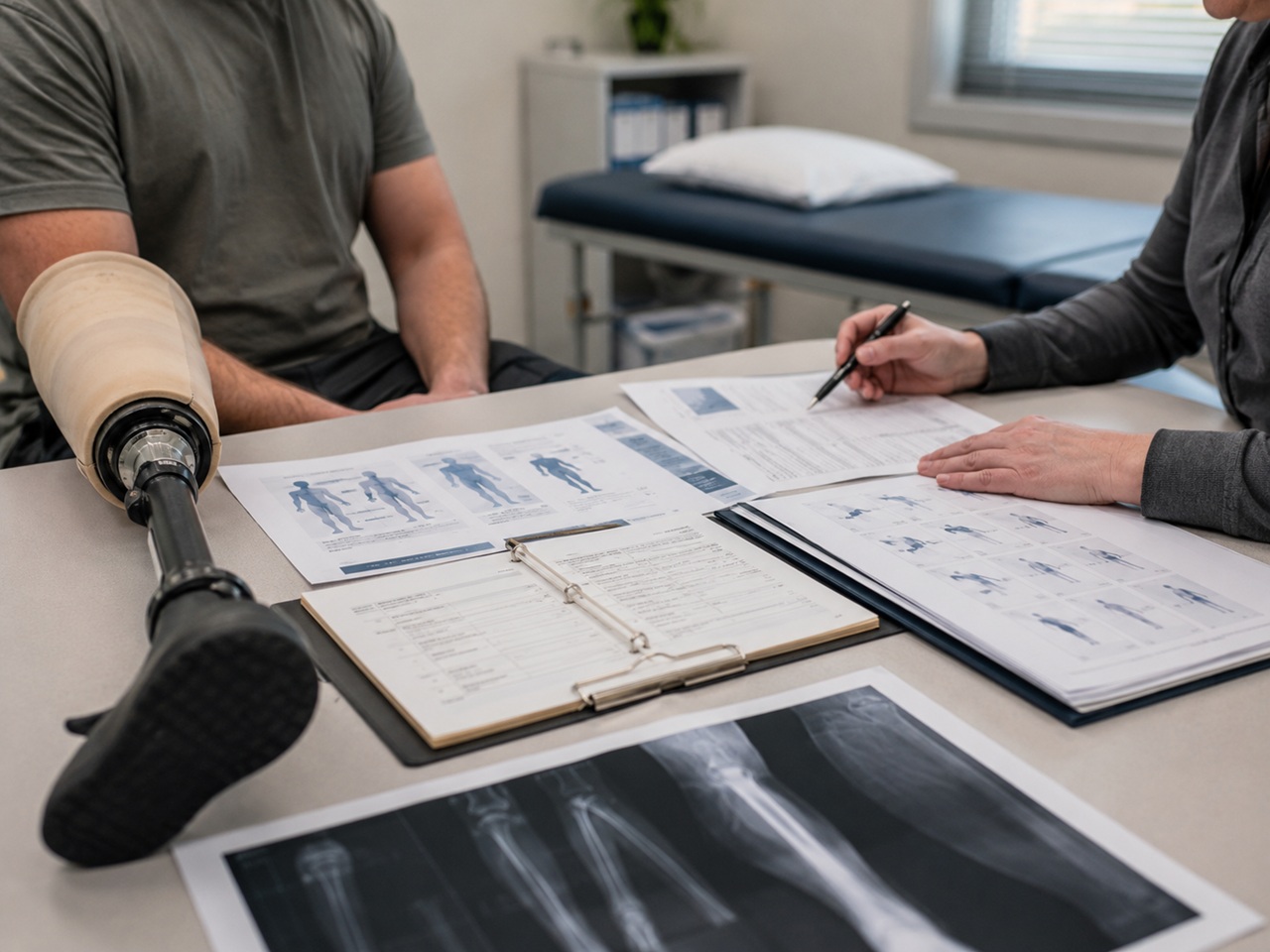
Amputation Cases Need Medical Expert Witnesses Who Can Prove The Full Lifetime Impact
An amputation is one of the most visually and emotionally powerful injuries a jury will ever encounter in a courtroom, and that can create a false sense of security for attorneys who assume the severity of the injury will speak for itself.
It won’t, at least not to the degree necessary to secure full compensation.
The gap between what a jury can observe and what they need to understand about a lifetime of medical, financial, functional, and psychological consequences is enormous. Closing that gap is where a qualified medical expert witness becomes indispensable.
Amputation cases involve layers of ongoing harm that extend decades beyond the injury itself. Without expert testimony that quantifies and contextualizes every dimension of that harm, even the most sympathetic jury may return a verdict that falls far short of what the client actually needs.
The Medical Experts Attorneys Need To Build A Complete Damages Case
No single expert can cover the full spectrum of loss in an amputation case. The injury touches too many medical disciplines simultaneously, and the attempt to funnel everything through one witness creates exactly the kind of gaps that opposing counsel will exploit.
A well-constructed expert strategy brings together specialists whose testimony builds on one another, producing a picture of the client's past, present, and future that no individual cross-examination can entirely dismantle.
- Trauma and Orthopedic Surgeons: The foundation of any amputation case begins with testimony about the injury itself, the mechanism that caused it, the surgical decisions made in response, and whether the standard of care was met at every stage. A trauma or orthopedic surgeon can establish the medical necessity of the amputation and address any attempt by the defense to suggest that the outcome was avoidable or the result of substandard post-injury care.
- Physiatrists and Rehabilitation Medicine Specialists: Physical medicine and rehabilitation physicians are uniquely positioned to testify about the long-term functional consequences of amputation. They can explain what the client can and cannot do, how physical capabilities have changed, what rehabilitation will look like over a lifetime, and how limb loss affects daily functioning, mobility, independence, and quality of life.
- Prosthetists and Prosthetic Technology Specialists: Prosthetic limbs are not one-time purchases. They require ongoing replacement, adjustment, repair, and upgrades as technology evolves and the client's residual limb changes over time. A prosthetics specialist can project the full cost of a client's prosthetic needs across a normal life expectancy, a figure that can reach into the hundreds of thousands of dollars, and one that the defense will aggressively challenge without a credentialed specialist to anchor it.
- Neurologists and Pain Management Specialists: Phantom limb pain is a neurological reality that affects many amputation patients and can be among the most debilitating aspects of the injury. A neurologist or pain management specialist can explain the physiological basis for this ongoing suffering in terms a jury can understand and believe, transforming what might otherwise seem abstract into a documented, treatable, and compensable condition.
- Psychologists and Psychiatrists: The psychological consequences of limb loss, including depression, post-traumatic stress disorder, adjustment disorders, anxiety, and profound disruption to identity and self-image, require their own expert voice. Psychological testimony helps establish the non-economic dimensions of the case and provides the evidentiary foundation for pain-and-suffering damages that extend beyond physical limitations.
- Life Care Planners: A life care planning expert synthesizes input from every other specialist into a single, comprehensive projection of the client's future medical and support needs. That document becomes one of the most powerful tools in the case, translating years of projected care into a dollar figure grounded in medical reality rather than attorney argument.
Coordinating the right combination of these experts and ensuring their testimony builds a coherent and mutually reinforcing picture of the client's losses requires case management that goes well beyond simply finding names in a directory.
Why Future Medical Costs Are So Heavily Contested In Amputation Cases
The cost of an amputation does not end when the surgical wound heals. Future medical care may include revision surgeries, prosthetic replacements, pain management, rehabilitation, mobility equipment, home modifications, mental health treatment, occupational therapy, physical therapy, and long-term monitoring for complications.
Those costs can become one of the most heavily disputed parts of the case. The defense may argue that the plaintiff needs a less advanced prosthetic, fewer replacements, less therapy, fewer mental health services, or a shorter projected care timeline. Without a properly supported plan, those arguments can chip away at the damages model until the verdict no longer reflects the client's actual future.
That is why physician life care planners can be so valuable in catastrophic injury litigation. They can connect medical findings, functional limitations, long-term care needs, and projected costs in a way that gives the jury a structured framework for damages.
Why Rehabilitation Testimony Matters After Limb Loss
Amputation cases are not only about what was lost. They are also about what the client must now do every day to function. That includes relearning movement, adapting to assistive devices, navigating pain, managing fatigue, preventing falls, maintaining the residual limb, and adjusting to the physical demands of work, home life, transportation, and personal care.
A rehabilitation specialist can explain the difference between isolated ability and sustainable function. A client may be able to stand briefly in a clinical setting but still be unable to work a full day. They may be able to use a prosthesis for limited periods but still experience skin breakdown, nerve pain, gait changes, exhaustion, or secondary injuries caused by overcompensation.
In long-term disability and catastrophic injury cases, rehabilitation specialists help translate medical impairment into real-world limitations. That testimony can support claims for lost earning capacity, loss of independence, future care, and diminished quality of life.
Why The Selection Process Matters As Much As The Testimony
An expert whose credentials don't hold up under scrutiny, whose testimony wanders under cross-examination, or whose objectivity can be questioned because they testify exclusively for one side can do more damage than no expert at all. Juries notice when an expert seems rehearsed rather than authoritative, when answers feel evasive, or when opposing counsel lands clean hits on qualifications or methodology.
The right expert for an amputation case is not simply the most credentialed person available in a given specialty. It is the person who combines deep clinical knowledge with the ability to communicate complex medical realities in plain, persuasive language. It is also the witness whose record of objectivity can withstand attacks on bias and whose presence in the courtroom conveys authority grounded in real clinical practice.
Early vetting matters because weaknesses that seem minor during record review can prove damaging under cross-examination. Attorneys who vet medical expert witnesses early are better positioned to build a damages case that holds together from case evaluation through trial.
Finding The Right Medical Experts For Your Amputation Case
For about 40 years, Rieback Medical-Legal Consultants has been connecting attorneys nationwide with highly credentialed, rigorously vetted medical experts across more than 100 specialties, including the trauma surgeons, rehabilitation specialists, neurologists, pain management specialists, psychiatrists, and life care planners that amputation cases demand.
Director Ellen Rieback, R.N., is personally involved in every case, screening each expert's credentials and commitment to unbiased testimony, and ensuring that the experts she recommends are the same professionals she would trust to care for her own family.
Free case summary reviews are available, and in urgent situations, evaluations can be turned around within 24 hours. If you are building an amputation damages case and need expert witnesses who can withstand cross-examination and hold up in a courtroom, contact us today.
"I have litigated personal injury cases for over 27 years, and I am extremely cognizant of the need for reputable, highly educated experts. It has been my experience that the experts referred through Rieback Medical-Legal Consultants are exceedingly qualified physicians, affiliated with highly regarded hospitals, who are dedicated to providing first-rate expert services in a timely manner." - Hertz Schram PC; Bloomfield Hills, Michigan