
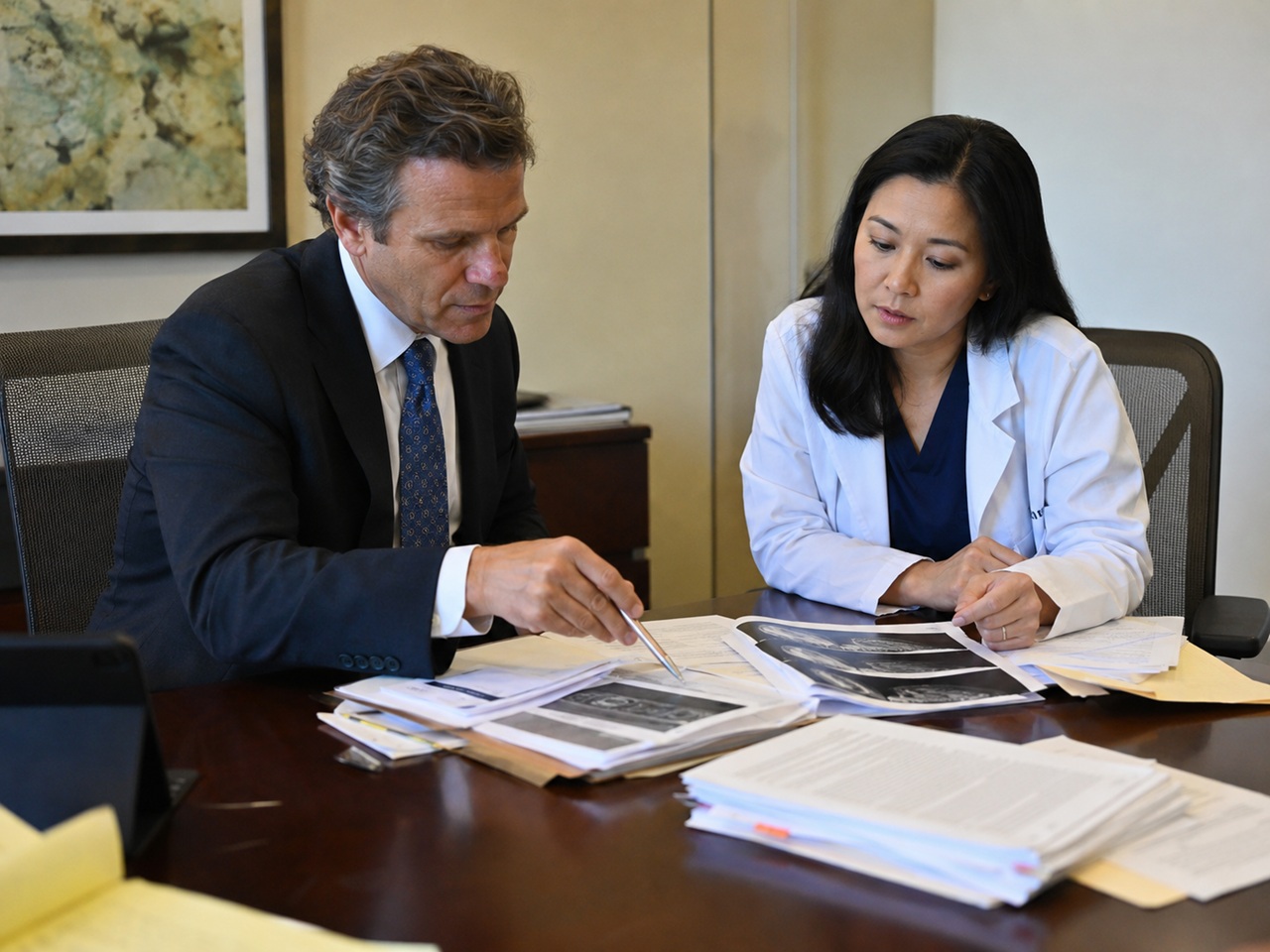
Strong Medical Malpractice Cases Depend on the Right Expert Witness
Medical Malpractice Awareness Month puts renewed attention on preventable medical harm each July, but proving that harm in court requires more than showing that a patient suffered a devastating outcome. Attorneys often need qualified medical testimony to establish what the appropriate standard of care required, whether a provider departed from it, and whether that failure caused the patient's injuries.
That makes medical malpractice expert witness selection one of the most consequential decisions an attorney can make during case development. The wrong medical witness can create credibility problems, qualification challenges, weak causation opinions, or testimony that becomes difficult to defend under cross-examination.
At Rieback Medical-Legal Consultants, Inc., we help plaintiff and defense attorneys connect with highly credentialed medical professionals who can evaluate the medicine objectively and communicate their opinions clearly from initial case review through deposition and trial.
The National Medical Malpractice Advocacy Association uses Medical Malpractice Awareness Month to focus attention on patients harmed by medical negligence and the importance of accountability. For attorneys handling those claims, that accountability often depends on finding the right medical voice to explain complicated evidence in a way judges and juries can understand.
Medical Credentials Alone Don't Make A Strong Witness
A distinguished CV may establish impressive medical qualifications, but litigation demands skills that aren't measured by degrees, fellowships, or academic appointments alone.
A strong medical expert witness should bring several qualities to the case:
- Relevant Clinical Background: The witness should have meaningful experience with the medical issue, procedure, specialty, or standard of care involved in the dispute.
- Strong Professional Credentials: Appropriate education, training, board certification when relevant, and active or substantial clinical experience can strengthen credibility.
- Clear Communication: Complicated medicine needs to be explained accurately without burying judges or jurors in terminology they can't follow.
- Objectivity: A credible witness needs to follow the medical evidence even when the conclusions aren't exactly what the retaining attorney hoped to hear.
- Command Of The Record: The witness should understand the timeline, medical records, imaging, prior conditions, alternative explanations, and other facts that may come under attack.
- Deposition And Trial Readiness: A sound medical opinion can still lose force if the witness becomes evasive, defensive, overly technical, or inconsistent under questioning.
These are some of the qualities that can make an effective medical expert witness much more valuable than someone selected primarily because their credentials look impressive on paper.
Early Witness Vetting Can Shape The Entire Case Strategy
Waiting until an expert disclosure or deposition deadline approaches can create problems that should have been identified much earlier.
When attorneys begin vetting medical witnesses early in the case, they have more time to test the medical theory against the actual records, identify weaknesses in causation, determine whether another specialty needs to be involved, and decide which claims are worth pursuing.
An early medical review may reveal that a case is stronger than it first appeared. It can also reveal that an assumption about negligence, causation, or damages isn't supported by the medicine.
Both findings have value. Attorneys need objective information before they invest heavily in discovery, depositions, litigation costs, and a case theory that may later depend on testimony the medical evidence can't support.
The Witness Must Match The Exact Medical Issue In Dispute
Medical malpractice cases aren't interchangeable. A delayed heart attack diagnosis, birth injury, surgical complication, nursing failure, medication error, and missed cancer diagnosis may each require very different medical backgrounds.
Rieback Medical-Legal Consultants maintains a network covering more than 100 medical specialties and related disciplines, allowing witness selection to begin with the medicine rather than trying to fit a convenient physician into a case that falls outside their strongest area.
Depending on the allegations, the appropriate medical witness may include:
- Cardiologists: Cases involving delayed diagnosis of cardiac conditions, heart attacks, diagnostic testing, treatment decisions, and complications of cardiac care.
- Neurologists: Claims involving brain injuries, strokes, neurological conditions, delayed diagnoses, and the long-term effects of neurological damage.
- Orthopedic Surgeons: Surgical complications, fractures, joint procedures, musculoskeletal injuries, and questions involving orthopedic treatment.
- Obstetricians And Gynecologists: Cases involving labor and delivery, maternal complications, fetal monitoring, cesarean delivery decisions, and other obstetrical issues.
- Nursing Professionals: Claims involving patient monitoring, medication administration, communication failures, nursing standards, and other issues involving bedside care.
- Toxicologists: Cases involving drugs, chemicals, toxic exposures, poisoning, or questions about how a substance affected the body.
Even within the same specialty, subspecialty training and current clinical experience can matter. An attorney may need someone familiar with a particular procedure, patient population, disease process, or type of complication rather than a physician with only broad experience in the field.
Qualification Rules Can Vary By Court And Jurisdiction
Selecting a medically appropriate witness is only part of the analysis. Attorneys also need to determine whether that person satisfies the legal requirements governing testimony in the jurisdiction where the case will be litigated.
State medical malpractice laws can impose their own qualification requirements, including rules involving specialty, board certification, active clinical practice, or how much professional time a witness devotes to particular activities.
In federal court, Federal Rule of Evidence 702 provides that qualified opinion testimony must help the trier of fact, rest on sufficient facts or data, use reliable principles and methods, and reliably apply those principles and methods to the facts of the case.
An impressive physician isn't automatically the right litigation witness. Attorneys need to evaluate both the medical fit and the rules governing whether the testimony will be admissible.
Objectivity Can Be More Valuable Than A Favorable Opinion
Attorneys don't need a physician who automatically agrees with the theory presented to them. They need someone willing to review the evidence honestly.
A witness who identifies a weak causation theory early can save an attorney from building months of litigation around a position that won't survive scrutiny. The same witness may identify a stronger medical issue that wasn't obvious from the initial case summary.
Objectivity also becomes important once testimony begins. Opposing counsel may examine prior opinions, publications, compensation, testimony history, methodology, inconsistencies, and any indication that a witness stretches conclusions depending on who hired them.
A medical witness who explains both the strengths and limitations of an opinion can often present more credibly than someone who refuses to acknowledge uncertainty or reasonable alternative interpretations.
Communication Can Determine Whether Strong Medicine Persuades A Jury
A medically correct opinion isn't enough if no one outside the profession can understand it.
Medical malpractice cases can involve thousands of pages of records, unfamiliar terminology, complicated anatomy, diagnostic reasoning, laboratory data, imaging, and treatment decisions made over minutes, days, or months.
The witness needs to turn that material into a clear explanation of what happened and why it matters.
That may mean explaining:
- What the patient's symptoms should have indicated.
- Which tests or treatment should reasonably have been considered.
- What the medical records show at a particular point in time.
- Why a delay changed the patient's outcome.
- Whether another medical explanation better fits the evidence.
- What long-term care or limitations may result from the injury.
The goal isn't to oversimplify the medicine. It's to make technically accurate information understandable enough that a judge or jury can evaluate the competing arguments.
Weak Witness Selection Can Create Problems Long Before Trial
A poorly matched witness doesn't have to reach the witness stand before problems begin.
An attorney may discover during deposition that the physician doesn't have the right clinical background, hasn't mastered the records, can't support a key causation opinion, or becomes inconsistent when pressed about alternative explanations.
By then, reports may have been exchanged, discovery may be closing, and the case strategy may already depend heavily on that testimony.
Replacing a witness late can increase costs, disrupt deadlines, and force attorneys to rebuild important parts of the case. In some circumstances, there may not be enough time to repair the problem at all.
Careful selection at the beginning reduces the risk of discovering too late that the witness who looked right on paper isn't the person the case actually needed.
Medical Malpractice Awareness Month Is A Reminder To Build The Medical Proof Carefully
Medical Malpractice Awareness Month focuses attention on preventable patient harm, but a legal claim still has to be supported by credible evidence and reliable medical testimony.
That process starts with understanding the medicine before choosing the witness. It means identifying the right specialty, checking qualifications, testing objectivity, evaluating communication skills, and making sure the physician can defend their opinions when opposing counsel pushes back.
We've spent decades at Rieback Medical-Legal Consultants building relationships with highly qualified medical and nursing professionals and helping attorneys find witnesses suited to the specific medical issues in their cases. Ellen Rieback, R.N., remains personally involved in the process from initial case review through deposition and trial support.
We don't simply provide a list of names and step away. We work with attorneys to understand the medical questions involved and identify the type of witness the case actually requires.
Contact us for a free case summary review and let us help you find the right medical expert witness for your case.
"It is clear that your consulting physicians have credentials that are beyond reproach and that they maintain extraordinarily high ethical and professional standards in their work for your clients." - Christopher F., ⭐⭐⭐⭐⭐